

Educational sensory toys are more than just colorful objects. They work as practical tools that help children explore the world, develop independence, strengthen motor and cognitive skills, and discover new ways to learn through play. However, with the huge variety available on the market, many parents and caregivers end up buying toys that look educational but, in practice, offer little or no real stimulation.
This guide was created to clear up exactly this confusion. Here, you will learn how to identify truly educational sensory toys, understand which options genuinely support child development, discover what each type stimulates, and learn how to use these toys at home in a simple and effective way.
What are educational sensory toys
Educational sensory toys are items specially designed to stimulate one or more of a child’s senses. They are developed to support natural learning through manipulation, exploration, repetition, and discovery. The main goal of these toys is to allow children to learn independently, without relying on complex instructions.
The stimulation can happen through:
- Texture.
- Color.
- Weight.
- Movement.
- Sound.
- Shape.
- Contrast.
- Fitting and matching.
- Resistance.
- Pressure.
These stimuli help children develop essential skills for everyday life. Unlike electronic toys that do everything automatically, educational sensory toys invite the child to take action. They touch, combine, take apart, stack, separate, test, and observe the results of their own actions. Through this process, children naturally develop attention, reasoning, creativity, and motor control, fully aligned with the rhythm of childhood.
Why educational sensory toys are so effective for child development
The strength of these toys lies in the type of stimulation they provide. They activate multiple areas of a child’s brain at the same time. And because play is engaging and spontaneous, learning happens naturally.
Here are the main benefits.
They stimulate fine and gross motor coordination
Educational sensory toys require specific movements such as pinching, pushing, pulling, twisting, or fitting pieces together. These actions help develop:
• Hand strength.
• Movement precision.
• Motor control.
• Bilateral coordination.
This directly impacts everyday tasks such as writing, holding a pencil, buttoning clothes, and even eating with utensils.
They increase focus and concentration
By exploring textures, movements, and small details, children practice staying focused on a single activity. This skill is essential for school life and daily routines at home.
They strengthen independence
Educational sensory toys are designed to allow children to discover how to use them on their own. This encourages independence, self-confidence, decision-making, and problem-solving without constant adult assistance.
They enhance creativity
Because there is no single correct way to play, children create their own possibilities. They invent scenarios, explore combinations, and transform the toy into something new every day.
They support emotional regulation
Repetitive movements, pleasant textures, gentle sounds, and fitting activities can help calm children, organize emotions, and reduce impulsivity. Many children naturally use educational sensory toys as a way to self-regulate.
They stimulate language and communication
When manipulating objects, children express themselves through gestures, sounds, and words. They narrate their play, describe textures, make requests, or create stories.
How to choose educational sensory toys that truly make a difference
Now begins the most important part of this guide. Here is a simple, direct, and proven method for choosing truly educational sensory toys. Just apply these criteria whenever you are considering buying any item.
Check whether educational sensory toys offer real stimulation
A toy is only considered sensory if it genuinely stimulates the senses. Look for elements such as:
- Different textures.
- Soft, rough, or textured surfaces.
- High-contrast colors.
- Parts that vibrate, spin, or slide.
- Objects that produce gentle sounds.
- Elements that require pressure to squeeze or pull.
Avoid toys that simply light up or play pre-recorded music, as they require little action and offer limited learning opportunities.
Choose open-ended educational sensory toys
Open-ended toys are those that allow multiple ways to play. They do not give fixed instructions. Instead, they encourage children to create.
Examples of open-ended toys:
- Building blocks.
- Sensory bins.
- Play kitchen items made of different materials.
- Wooden pieces.
- Modeling clay or dough.
- Geometric shapes.
- Large beads and laces.
This type of toy grows with the child and can be used for many years, adapting to different stages of development.
Choose durable and safe toys
Safety is essential. Check for:
- Product safety certifications.
- Non-toxic paint and finishes.
- Pieces larger than 1.6 inches (4 cm) for young children.
- Rounded edges.
- Durable materials.
- No sharp or pointed parts.
In addition, prioritize toys designed to last for years, not just weeks.
Choose educational sensory toys appropriate for the child’s age
Each age group has specific needs. Below is a practical guide.
Babies
- Textured teethers.
- High-contrast cards.
- Soft sensory balls.
- Lightweight blocks.
- Simple rattles.
Goal: discovering the world through the senses.
Ages 1 to 3
- Open-and-close containers.
- Stacking blocks.
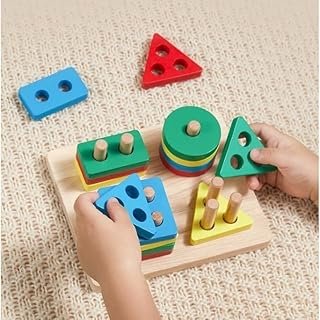
- Large fitting and sorting toys.
- Sensory books.
- Edible or taste-safe sensory dough.
Goal: exploring, testing, and repeating actions.
Ages 3 to 6
- Large threading beads.
- Shape and color matching sets.
- Simple puzzles.
- Sensory bins with varied materials.
- Transfer and pouring activities.
Goal: developing logic, coordination, and precision.
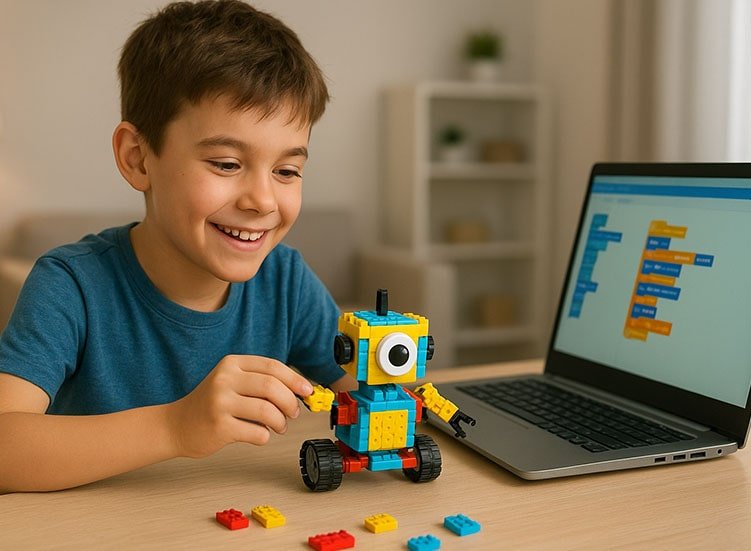
Ages 6 and up
- Basic science kits.
- More structured modeling clay.
- Logic and strategy games.
- Small construction challenges.
Goal: reasoning, planning, and creativity.
Types of educational sensory toys and what each one develops
Now let’s take a closer look at the toys that truly make a difference in child development. This section is especially valuable because it helps parents clearly understand what each item stimulates.
Sensory building blocks
They stimulate:
- Coordination.
- Balance.
- Creativity.
- Spatial awareness.
- Colors and shapes.
Sensory blocks are among the most complete educational sensory toys. They grow with the child and can be used for many years.
Click to view the product!
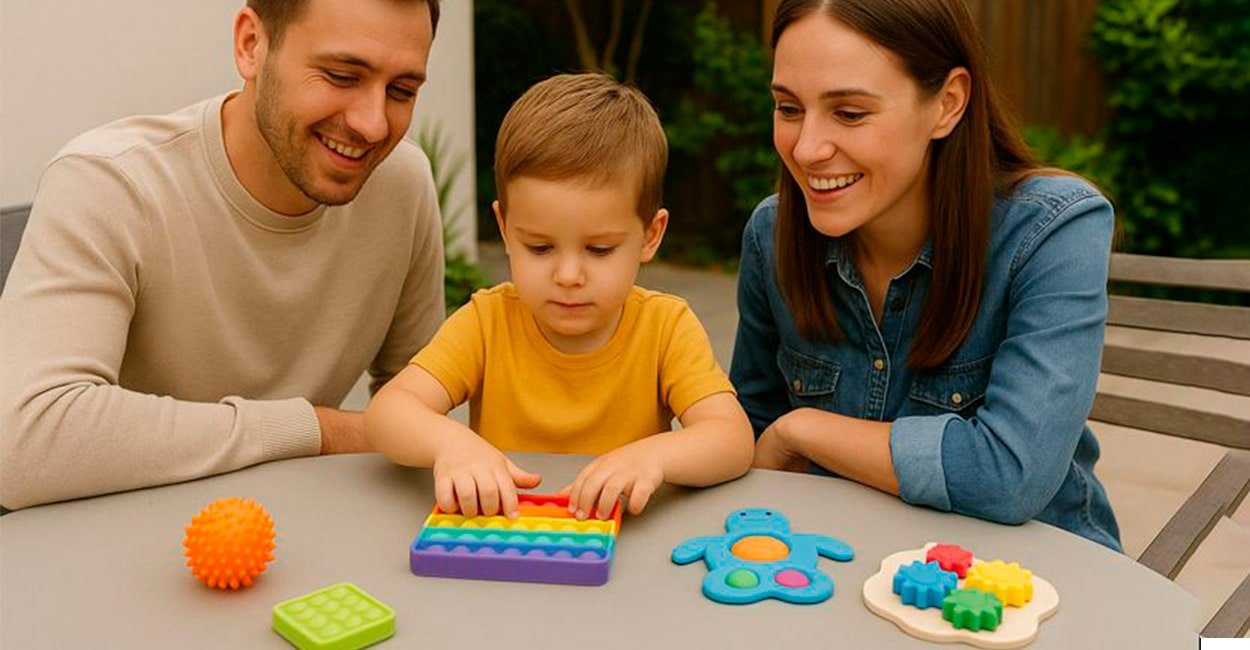
Sensory balls
They stimulate:
- Touch.
- Pressure.
- Strength.
- Gross motor coordination.
They are great for calm activities as well as for play that helps release energy.
Sensory books
They stimulate:
- Language.
- Attention.
- Memory.
- Perception.
Sensory books help children build reading routines from an early age.
Sensory bins
They stimulate:
- Exploration.
- Focus.
- Creativity.
- Experimentation.
Using materials like rice, beans, sand, water gel, or sponges, it is possible to create endless sensory experiences.
Sensory dough and gel
They stimulate:
- Fine motor skills.
- Hand strength.
- Creativity.
These toys are excellent for the preschool stage.
Fitting and sorting toys
They stimulate:
- Logic.
- Fine motor coordination.
- Size perception.
- Sequencing.
They are ideal for training patience, control, and precision.
Simple musical instruments
They stimulate:
- Rhythm.
- Hearing.
- Coordination.
- Expression.
They can be used from infancy through early childhood.
Sensory boards
They stimulate:
- Exploration.
- Cause and effect.
- Curiosity.
- Independence.
They are excellent additions to bedrooms or playrooms.
Click to view the product!
✅ How to use educational sensory toys at home to maximize results
Knowing how to choose is important, but knowing how to use sensory toys turns them into truly effective educational tools.
Below are simple and practical strategies.
Keep some educational sensory toys within the child’s reach
When children choose to play on their own, they learn more and develop better.
Create small activity stations
Set up areas with modeling dough, blocks, sensory books, or a sensory bin.
This helps maintain interest for longer periods.
Rotate stimuli weekly
Switching toys keeps the sense of novelty and prevents loss of interest.
Play together occasionally
Not to teach.
But to observe, comment, and encourage independence.
Use household items as sensory toys
Funnels, spoons, containers, strainers, clothespins, jars, and fabrics can become completely free and highly educational sensory experiences.
❌ Common mistakes when choosing educational sensory toys
Buying toys that do everything by themselves
The less action required from the child, the less development occurs.
Too many lights and electronic sounds
They can overstimulate children and reduce focus.
Buying too many toys at once
Excess toys can hinder exploration.
Choosing toys above the child’s age level
The child quickly loses interest.
❓ (FAQ) frequently asked questions about educational sensory toys
They are toys designed to stimulate the senses and skills, helping children learn through exploration and play.
Soft balls, high-contrast cards, simple rattles, and textured teethers.
Check whether it genuinely stimulates a sense, allows open-ended play, and helps develop useful skills.
A few well-chosen toys are enough. Quality matters more than quantity.
They do not replace outdoor play, but they complement it. Outdoor activities develop other skills such as balance, strength, and body awareness. Combining both experiences offers the best support for child development.
The best time is when the child is well-rested and curious. This usually happens in the morning or after a short break. It is best to avoid using them when the child is hungry, irritated, or very tired, as the quality of exploration decreases.
🔗 Recommended reading on Tudum blog
If you want to deepen your understanding of how Children & Education influence child development, autonomy, and preparation for the future, we have gathered all the content in this category into a complete and strategic guide on the topic.
👉 Click here to read the article.
Conclusion on educational sensory toys that truly support child development
Educational sensory toys are simple yet extremely powerful tools for stimulating skills that make a difference throughout a child’s life. When you choose options that offer varied textures, real challenges, freedom to explore, and that match the child’s age, the toy stops being just a fun object and becomes a daily learning resource.
They support motor coordination, strengthen language, improve attention, reduce stress, promote independence, and create meaningful moments of connection between parents and children. The most important point is to avoid impulsive choices and focus on educational sensory toys with a clear purpose, real function, and practical everyday use.
If you follow the criteria in this guide, it is very unlikely that you will make a poor purchase. You will be investing in toys that last, create real value, and truly support child development in a universal, timeless way, without relying on passing trends.
Did you enjoy this content? Share it with someone who is choosing educational sensory toys and wants to make smarter decisions.
🔗 Want to keep learning about toys that support child development?
Read our other related articles:
👉 Educational games for children, ideas to stimulate each age group
Click here for more content about Children & Education.