


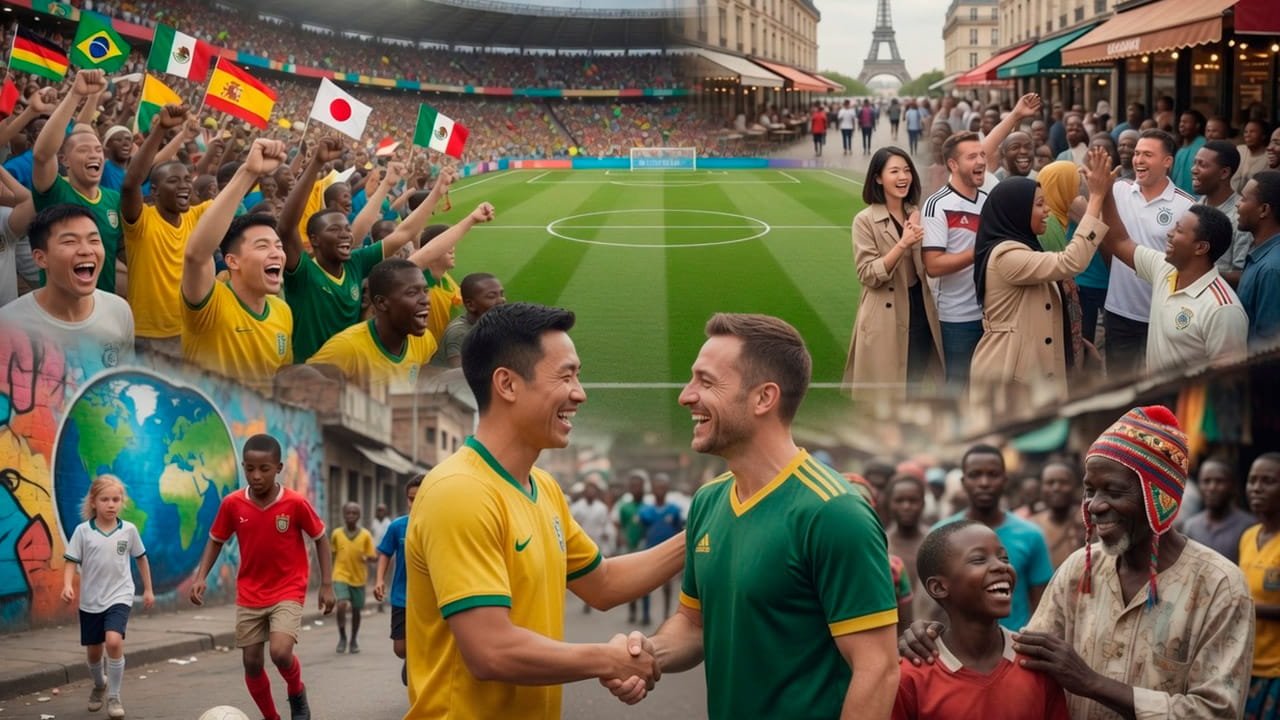
Soccer is much more than a sport. Across virtually every continent, it represents identity, tradition, belonging, and a shared passion among people from different cultures. It is within this environment that sports communities thrive, bringing together fans, athletes, clubs, and content creators around a common interest that goes far beyond the outcome of a match.
Over the past few decades, these communities have evolved significantly. Once centered around neighborhoods, cities, and stadiums, they now also thrive in digital spaces, connecting people who may never meet in person but who share the same values, emotions, and sporting traditions.
In this article, you’ll learn what sports communities are, how they influence soccer’s global popularity, how technology has transformed the fan experience, and why this phenomenon continues to grow year after year.
What are sports communities?
Sports communities are groups of people who share a common interest in a particular sport, club, national team, athlete, or competition. They can exist both in person and online, bringing together individuals who regularly interact through events, conversations, content, and experiences related to sports.
Although sports communities exist across virtually every sport, few have a reach comparable to soccer. The combination of tradition, accessibility, and extensive media coverage encourages millions of people to develop lasting emotional connections with their favorite clubs and national teams.
In practice, being part of a sports community means much more than simply watching matches. It involves following the latest news, discussing lineups, sharing opinions, celebrating victories, coping with defeats, and building friendships based on a shared passion.
This sense of belonging is one of the main reasons why soccer remains one of the world’s most popular sports.
Why does soccer create such strong communities?
Many sports inspire enthusiasm, but few create bonds as lasting as soccer.
Much of this strength comes from its simplicity. A ball and a small open space are enough for children and adults to play almost anywhere in the world. This accessibility helps create family traditions that are passed down from one generation to the next.
In addition, many fans develop their sporting identity during childhood. The club they support becomes part of their family’s story, their friendships, and their local culture.
This emotional connection strengthens sports communities because it creates a lasting sense of continuity. Even when players transfer, coaches change, or competitions come to an end, the community remains united by the identity built over many years.
Another important aspect is the collective experience. Unlike many individual activities, soccer is often enjoyed in groups, whether at stadiums, sports bars, public gatherings, or watch parties with friends. These shared experiences strengthen social bonds that frequently extend beyond the sport itself.
How sports communities evolved through globalization
For much of the 20th century, supporting a club was closely tied to the city or region where it was based. Most fans followed matches through radio broadcasts, newspapers, or free-to-air television, limiting their exposure to clubs from other countries and making sports communities primarily local.
This began to change with the expansion of international broadcasts, cable television, and, most importantly, the internet. Today, fans can watch live matches, follow breaking news, participate in dedicated online communities, and interact daily with people who share the same passion, even if they live on different continents.
The growing popularity of major international tournaments, along with global soccer development programs, has helped expand this reach. FIFA itself promotes initiatives aimed at developing the sport and strengthening soccer in different regions around the world, helping connect even more fans and sports communities.
As a result, clubs have built global fan bases while maintaining their local identities. Today, millions of people support clubs from other countries, participate in online communities, and share experiences that go beyond geographical borders, languages, and cultural differences. The main force uniting these sports communities is no longer physical proximity, but a shared passion for soccer and a strong sense of belonging.
Technology has brought millions of fans closer together
Digital transformation has fundamentally changed the way people follow soccer.
Today, the experience extends far beyond the ninety minutes of a match.
Fans now follow training sessions, interviews, behind-the-scenes content, statistics, documentaries, podcasts, and live streams throughout the week.
This constant flow of content strengthens sports communities by keeping conversations active every day.
In addition, mobile apps provide instant notifications about lineups, transfers, match results, and statistics, making fan engagement far more dynamic.
Rather than relying solely on content produced by traditional media outlets, fans now create their own content, share analyses, and shape discussions within their communities.
This shift has brought clubs and fans closer together than at any other time in the history of the sport.
How social media transformed sports communities
Social media has fundamentally changed the way fans experience soccer. While interactions between supporters once took place mainly in stadiums, sports bars, or face-to-face gatherings, today they happen around the clock across digital platforms.
This transformation has allowed sports communities to thrive without relying on geographical proximity. Today, a fan can follow their favorite club, connect with fellow supporters, and participate in discussions even while living in another state or country.
In addition to expanding the reach of these communities, social media has democratized the creation of sports content. Fans now produce match analysis, videos, podcasts, live streams, and pages dedicated exclusively to their favorite clubs. Many of these creators have built large audiences and become respected voices within their own communities.
Another important factor is the speed at which information spreads. Team lineups, interviews, behind-the-scenes content, and breaking news reach fans within seconds, keeping interest alive between matches and strengthening the sense of belonging.
At the same time, this accessibility requires caution. The rapid spread of unverified information can fuel rumors and misunderstandings. For this reason, healthy sports communities value reliable sources, respectful discussions, and the responsible sharing of information.
The sense of belonging strengthens sports communities
One of the main reasons behind the growth of sports communities is the sense of belonging they provide.
By becoming part of a community, fans connect with people who share similar experiences, understand their emotions, and feel the same anticipation before an important match.
This connection goes far beyond simply supporting a team. Many members build lasting friendships, organize in-person gatherings, take part in community initiatives, and stay connected every day through messaging groups or dedicated online forums.
This collaborative environment strengthens a shared identity and helps preserve traditions that are passed down from one generation to the next.
In many cases, entire families have supported the same club for decades. Parents, children, and grandparents share stories, memories of unforgettable matches, and traditions that have become part of their community’s sporting culture.
This passing of values helps keep traditions alive that would be difficult to preserve through competitions alone.
Fantasy games, apps, and new ways to participate
Technology has also created entirely new ways to participate in sports communities.
Fantasy sports, league simulators, statistics apps, and prediction platforms have transformed fans into active participants in the sports experience.
Instead of simply watching matches, many people analyze individual performances, follow advanced statistics, build fantasy teams, and compete with friends.
These activities significantly increase the time fans spend engaging with the sport, keeping their interest alive even on days without matches.
In addition, specialized apps provide detailed real-time statistics, including possession, shots, heat maps, passing accuracy, tackles, and many other metrics that deepen fans’ understanding of the game.
This evolution has made sports discussions far more analytical than they were just a few years ago.
Today, it is common for fans to use data to support opinions, compare performances, and debate tactical strategies, raising the quality of conversations within sports communities.
The economic impact of sports communities
Sports communities also play an important role in the sports economy.
Clubs, leagues, sponsors, and sporting goods manufacturers continuously invest in initiatives designed to strengthen relationships with their supporters.
The higher a community’s level of engagement, the greater its potential to generate revenue.
This is because highly engaged fans are more likely to purchase official merchandise, join membership programs, buy match tickets, watch broadcasts, and support initiatives promoted by their clubs.
Beyond major clubs, local sports communities also contribute significantly to regional economies.
Youth soccer programs, local tournaments, charity events, specialty sports stores, and businesses located near stadiums often depend on the active participation of these communities to thrive.
As a result, the impact of sports communities extends far beyond the stands. They support local businesses, create employment opportunities, and contribute to the economic development of communities around the world.
Benefits of sports communities for society
Although soccer is often associated with entertainment, its positive impact reaches many aspects of social life.
Sports communities encourage interaction among people of different ages, professions, and cultural backgrounds.
This environment promotes dialogue, strengthens personal relationships, and encourages respect for differences when built on positive values.
In addition, many communities organize charity drives, food donations, blood donation campaigns, educational programs, and initiatives aimed at supporting local communities.
Another important benefit is the encouragement of sports participation.
By following clubs and athletes, many people become inspired to play soccer or other sports, adopt more active lifestyles, and participate more frequently in group activities.
This influence demonstrates how sports can serve as a powerful force for social connection, strengthening communities and promoting overall well-being.
The challenges facing sports communities in the digital age
The growth of sports communities has created countless opportunities to bring fans closer together, expand access to information, and strengthen sports culture. However, this evolution has also introduced new challenges that require a balance between technology, respect, and responsibility.
One of the biggest challenges is the rapid spread of misinformation. Within minutes, rumors about transfers, starting lineups, or behind-the-scenes developments can reach millions of people before they are ever confirmed. This makes it increasingly important for community members to think critically and rely on trustworthy sources.
Another significant challenge involves behavior in online discussions. Passion for soccer often brings out strong emotions, and without respect for differing opinions, healthy debates can quickly turn into personal attacks and excessive rivalry.
Fortunately, many sports communities have promoted initiatives that encourage more respectful conversations, reinforcing the idea that different opinions are part of the sport and enrich the fan experience.
Another important issue is preserving the cultural identity of clubs.
As fan bases continue to grow internationally, many clubs have adapted their communication to audiences in different countries. While this expansion increases their global presence, it also raises discussions about the importance of preserving the traditions, symbols, and characteristics that have shaped each club’s identity over the decades.
Finding the right balance between innovation and tradition will be one of the key factors in strengthening sports communities in the years ahead.
How artificial intelligence is transforming sports communities
Artificial intelligence has become part of everyday sports in ways that many fans may not even notice.
Today, many platforms use AI-powered algorithms to recommend personalized content, highlight key moments from matches, and deliver statistics tailored to each user’s interests.
This personalization improves the experience within sports communities by allowing every fan to follow the topics that matter most to them.
Beyond content recommendations, artificial intelligence also helps journalists, analysts, and content creators organize information, identify statistical patterns, and produce more comprehensive analyses.
Professional clubs also use AI-powered tools to study opponents, evaluate player performance, analyze tactical movements, and even support decisions related to athlete training.
For fans, this means access to increasingly detailed information, making conversations within sports communities more insightful and data-driven.
It is important to remember that artificial intelligence complements human expertise, but it cannot replace the passion, creativity, and experience that define the world of sports.
The future of sports communities
Everything suggests that sports communities will continue to grow in the coming years.
The expansion of digital broadcasting, on-demand content, and interactive platforms allows more people than ever to follow competitions regardless of where they live.
At the same time, emerging technologies promise to make the fan experience even more immersive.
Features such as augmented reality, virtual reality, and broadcasts with multiple camera angles are already beginning to change the way fans experience matches.
Another important trend is the continued growth of specialized communities.
Alongside major fan bases, interest is increasing in communities dedicated to women’s soccer, youth development, tactical analysis, sports memorabilia, club history, and independent content creation.
These smaller communities often encourage deeper, more collaborative discussions, further enriching the diversity of the sports ecosystem.
At the same time, clubs, leagues, and competition organizers are expected to invest even more in fan engagement programs designed to connect supporters from different generations.
The future points toward an experience in which fans are no longer just spectators but active participants in shaping sports culture.
Comparative analysis of the evolution of sports communities
| Aspect | Traditional communities | Modern sports communities |
|---|---|---|
| Interaction environment | Stadiums, neighborhoods, and in-person gatherings | Social media, mobile apps, online forums, and live streaming platforms |
| Reach | Regional | Global |
| Fan participation | Primarily during matches | Daily, including creating and sharing content |
| Access to information | Newspapers, radio, and television | Real-time news and advanced statistics |
| Relationship between fans | Mostly local | Global, collaborative, and ongoing |
| Sports experience | Focused on the match itself | Continuous content, interaction, and participation |
This comparison shows that technology has not replaced the passion for sports. Instead, it has expanded the ways fans can participate, allowing millions of people to share experiences that were once limited to stadiums and local supporter groups.
 FAQ Frequently asked questions about sports communities
A sports community is made up of people who share an interest in a particular sport, club, athlete, or competition and regularly interact through in-person or online activities.
No. Sports communities exist across virtually every sport. However, soccer brings together some of the world’s largest communities because of its global popularity.
The internet has removed geographical barriers, allowing fans to watch matches, join discussions, create content, and stay connected with other supporters regardless of where they live.
Social media brings clubs, athletes, and fans closer together, makes it easier to share information, encourages discussions, and expands the reach of sports communities to millions of people worldwide.
Yes. Many sports communities organize charitable initiatives, community projects, fundraising campaigns, and programs that encourage sports participation while supporting education, culture, and community engagement.
 Recommended reading on Tudum Blog
Enjoy Sports & Recreation and want to explore more topics?
Check out our Practical guide to sports and recreation, featuring ideas to help you discover activities that match your lifestyle and make your daily routine more enjoyable.
 Click here for more Sports & Recreation content.
Conclusion about modern sports communities
Sports communities represent one of the most important aspects of modern soccer. They demonstrate that passion for the sport goes far beyond the outcome of a match, creating lasting connections between people from different cultures, generations, and regions around the world.
Technological advances have expanded this phenomenon, allowing fans to actively participate in the lives of their favorite clubs through social media, mobile apps, video platforms, and many other digital tools. At the same time, values such as tradition, respect, identity, and belonging remain the foundation that keeps these communities strong.
As new technologies continue to emerge and the sports experience becomes increasingly interactive, sports communities are expected to become even more relevant, strengthening the relationship between clubs and supporters while helping preserve soccer culture for future generations.
If you enjoy following the world of sports and want to discover more fascinating facts, different sports, and emerging trends that engage millions of people worldwide, continue exploring the Sports & Recreation category on Tudum Blog.
Click here for more Sports & Recreation content.