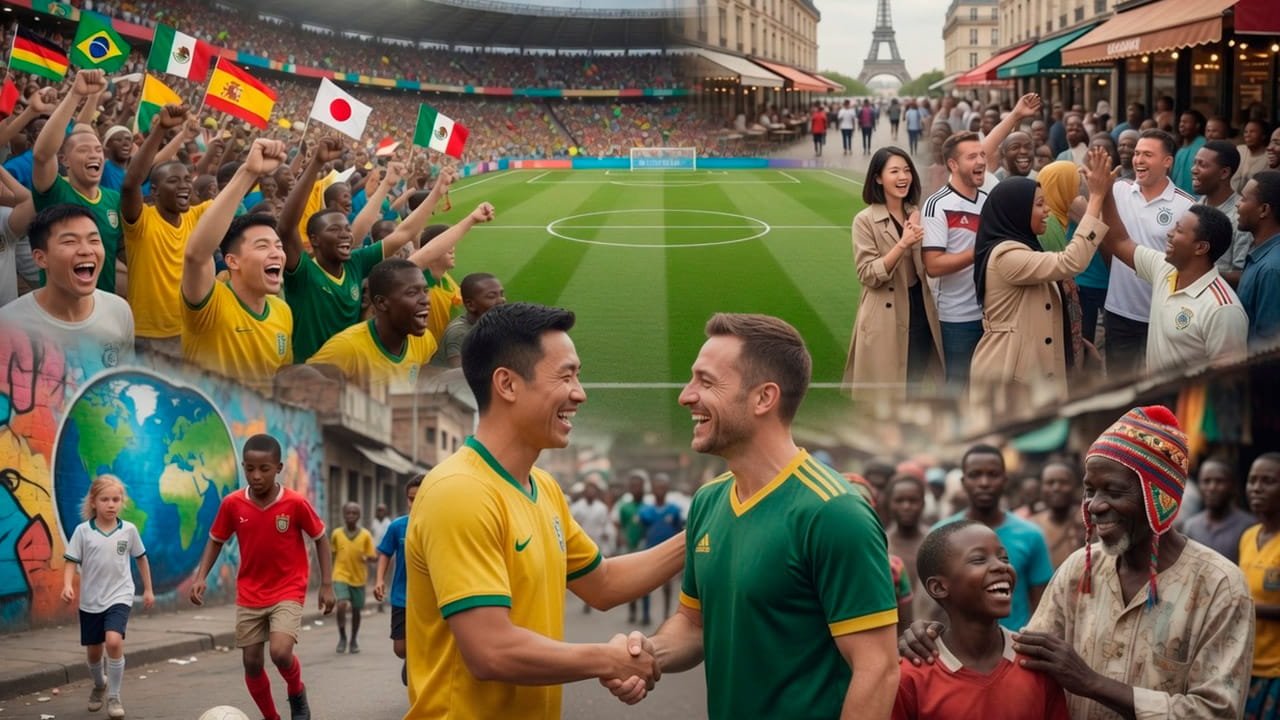


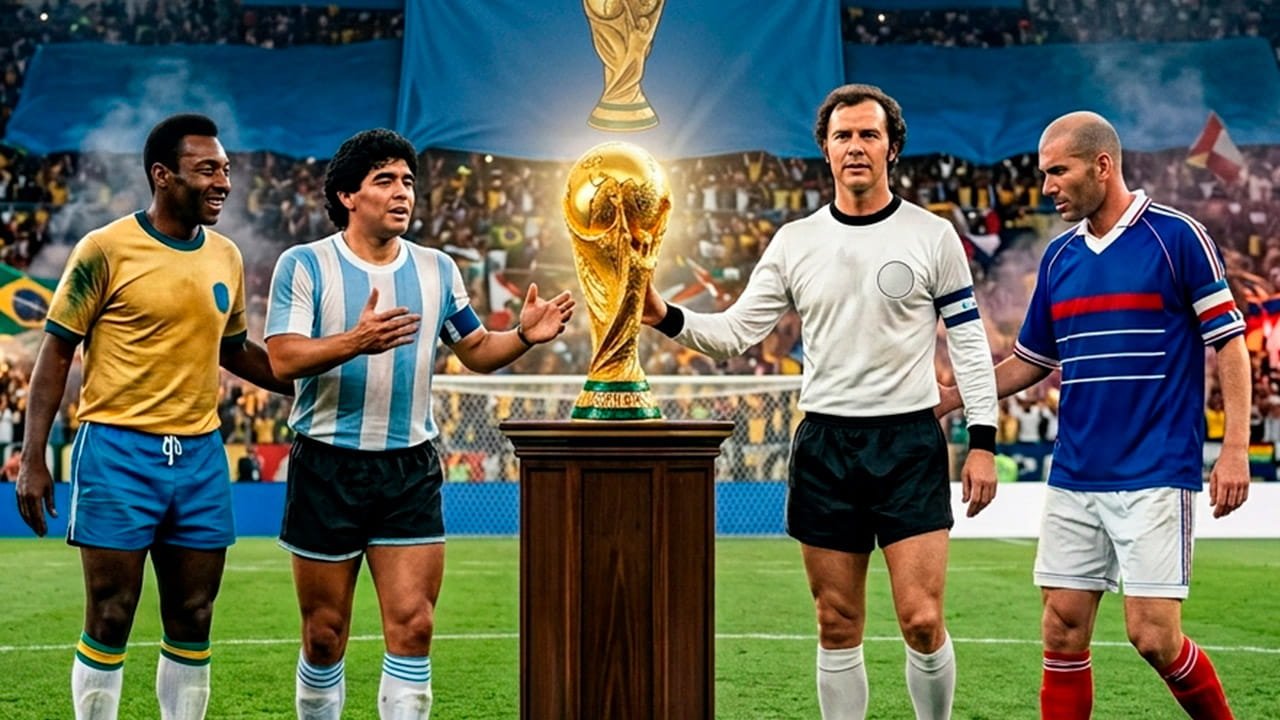
Few events can stop the entire planet. The World Cup of Soccer does exactly that. Every four years, billions of people connect through a shared passion. It does not matter the country, language or culture. During the tournament, everyone speaks the same language: soccer.
But have you ever stopped to think about how it all began? Or what fascinating stories are hidden behind this massive event?
This guide goes far beyond the basics. Here you will understand the origin of the World Cup, its most memorable moments and discover facts that make this event even more fascinating.
If you are a soccer fan, or simply curious about how a sporting event can influence the entire planet, this is the most complete content you will find.
⚽ The origin of the World Cup of Soccer
The history of the World Cup begins with a simple yet revolutionary idea. To create an international tournament that would bring together national teams from different countries.
The man responsible for turning this vision into reality was Jules Rimet, then president of FIFA.
Before that, soccer already existed at an international level, but only in the Olympic Games. The issue was that the Olympic tournament did not fully meet the professional demands of the sport.
In 1930, the first edition of the FIFA World Cup was held in Uruguay.
Why was Uruguay chosen to host the first World Cup of Soccer?
The country was a soccer powerhouse at the time and had won Olympic gold in 1924 and 1928. In addition, it was celebrating 100 years of independence.
Uruguay not only hosted the tournament but also won the first World Cup.
🏆 Evolution of the World Cup of Soccer over time
The World Cup has gone through many transformations since its creation.
Expansion of participants
- 1930: 13 teams.
- Following decades: gradual growth.
- Today: 32 teams (with expansion to 48 planned).
This growth reflects the global popularity of soccer.
Historical interruptions
The World Cup was interrupted during World War II:
- 1942: Cancelled.
- 1946: Cancelled.
These periods show how closely the event is connected to world history.
Modernization
With technological advances, the World Cup has evolved:
- Live broadcasts worldwide.
- Use of VAR (Video Assistant Referee).
- Advanced performance analytics.
🌍 Historic moments that shaped the World Cup of Soccer
The history of the FIFA World Cup is not built only on titles. It lives through moments that shaped generations, created legends and, in many cases, changed the course of soccer.
Some of these moments go far beyond the game itself. They involve emotion, pressure, resilience and even mystery.
🇧🇷 1958 – The rise of Pelé
In 1958, in Sweden, the world discovered a 17-year-old who would change soccer forever.
Pelé started the tournament as a promise. He finished it as a legend.
In the semifinal, he scored three goals against France. In the final, he scored two against the host nation. One of them became historic: he lifted the ball over a defender and finished with precision, showing creativity that was rare at the time.
Brazil won its first World Cup title.
After the final whistle, Pelé cried on the field in the arms of his teammates. The image went around the world and symbolized the birth of a global icon.
🇲🇽 1970 – The definitive greatness of Pelé
Twelve years later, Pelé was no longer a rising star. He was a global reference.
In the 1970 World Cup, he led one of the most admired teams in history. A technical, creative and attacking side.
In the final against Italy, Brazil won 4–1.
Pelé scored the opening goal with a header, but his impact went far beyond that. He was involved in key plays and created moments that are still studied today.
One of the most famous was the “goal that never happened,” when he let the ball pass the goalkeeper without touching it. It did not become a goal, but became a symbol of genius.
This World Cup of Soccer established Brazil as a global powerhouse and elevated the sport to the level of art.
🇦🇷 1986 – “The Hand of God” The day Diego Maradona was brilliant and controversial
In the quarterfinal against England, Maradona delivered one of the most iconic performances in World Cup history.
First, he scored with his hand. The referee allowed it. The moment became known as the “Hand of God.”
Minutes later, he did the opposite.
He received the ball in midfield, dribbled past multiple defenders and scored one of the greatest goals of all time.
In the same match, Maradona showed two sides of soccer: imperfection and brilliance.
🇫🇷 1998 – The mystery of Ronaldo Nazário
In the 1998 final, the world expected Ronaldo to shine.
But hours before the match, he suffered a seizure.
The situation was never fully explained. To this day, there are doubts and theories about what really happened.
Ronaldo took the field, but he was clearly different. No rhythm, no intensity.
Brazil lost 3–0 to France.
This episode became one of the biggest mysteries in World Cup history and exposed the immense pressure on elite athletes.
🇧🇷 2002 – Ronaldo’s redemption
Four years later, Ronaldo returned surrounded by doubts.
Serious injuries had nearly ended his career. Many believed he would not return to top level.
On the field, he answered with a historic performance.
He scored 8 goals in the tournament and was decisive in the final against Germany, scoring both goals of the victory.
Brazil won its fifth title.
This journey turned Ronaldo into a symbol of resilience and marked one of the greatest individual comebacks in sports history.
🇩🇪 2006 – The unexpected farewell of Zinedine Zidane
The 2006 final seemed like the perfect stage for Zidane’s farewell.
He had already scored a goal and was the standout player against Italy.
But in extra time, everything changed.
After a provocation, Zidane reacted with a headbutt on Materazzi.
He was immediately sent off.
He walked off the field in silence, passing by the trophy he could have lifted.
France lost on penalties.
The episode became one of the most impactful moments in World Cup history and a reminder of how emotions can decide even the biggest moments.
🇪🇸 2010 – The goal that changed the history of Spain
The final against the Netherlands was tense, balanced and marked by strong defending.
The match was heading to penalties.
In extra time, Andrés Iniesta appeared at the decisive moment.
He received the ball inside the box and finished with precision.
Goal.
Spain won its first World Cup.
More than a title, that moment crowned a generation that changed the way soccer is played.
🇧🇷 2014 – The 7–1 shock
In the semifinal, Brazil faced Germany playing at home.
The expectation was a balanced match.
But what happened became history.
Germany scored 5 goals in less than 30 minutes.
The match ended with a 7 to 1 scoreline.
Silence in the stadium and global disbelief turned this game into one of the most impactful moments in modern soccer.
🇫🇷 2018 – The rise of Kylian Mbappé
At the World Cup in Russia, a 19-year-old caught the world’s attention.
Mbappé combined speed, technique and personality.
He scored in the final and became one of the few players so young to do it, alongside Pelé.
A new global star was born.
These moments do something numbers cannot express, because the World Cup is not just about who wins. It is about the stories that remain.
And it is these stories that bring billions of people back to watch, support and feel the emotion every edition.
🇸🇳 2002 – The surprise of the Senegal National Team
In the 2002 World Cup, Senegal made its debut.
Right in the opening match, they defeated France, the defending world champion.
The team advanced to the quarterfinals, exceeding expectations and winning over the world with an attacking and dynamic style of play.
This campaign became one of the biggest surprises in World Cup history.
🇦🇷 2022 – The crowning of Lionel Messi
The 2022 World Cup, held in Qatar, was marked by one of the most anticipated stories in soccer.
Lionel Messi had already achieved almost everything in his career. The only thing missing was the World Cup.
Argentina started poorly, with an unexpected defeat to Saudi Arabia. Many doubted them.
But the team responded.
Messi led the team with decisive performances, important goals and emotional control. In the final against France, he played one of the most epic matches in history.
A 3 to 3 draw. A penalty shootout.
Argentina won.
Messi lifted the trophy and completed his journey. The moment symbolized not only a victory, but the closing of a historic chapter in world soccer.
🤯 Surprising World Cup of Soccer facts
Here are facts that few people know.
1. The original trophy was stolen
The first FIFA World Cup trophy was known as the Jules Rimet Trophy, named after the creator of the tournament, Jules Rimet.
It was not just a trophy. It represented the birth of global soccer as a worldwide spectacle.
But its history was marked by crimes worthy of a movie.
The trophy was stolen twice.
The first theft happened in 1966, in England, just months before the tournament. It was on display when it mysteriously disappeared.
The second theft, even more impactful, occurred in 1983, in Brazil.
This time, it was never recovered.
The trophy was taken from a Brazilian Football Confederation headquarters and, according to investigations, was likely melted down and sold.
To this day, its official whereabouts have never been confirmed.
This episode turned the Jules Rimet Trophy into a kind of “lost relic” of world soccer.

2. A dog saved the World Cup of Soccer
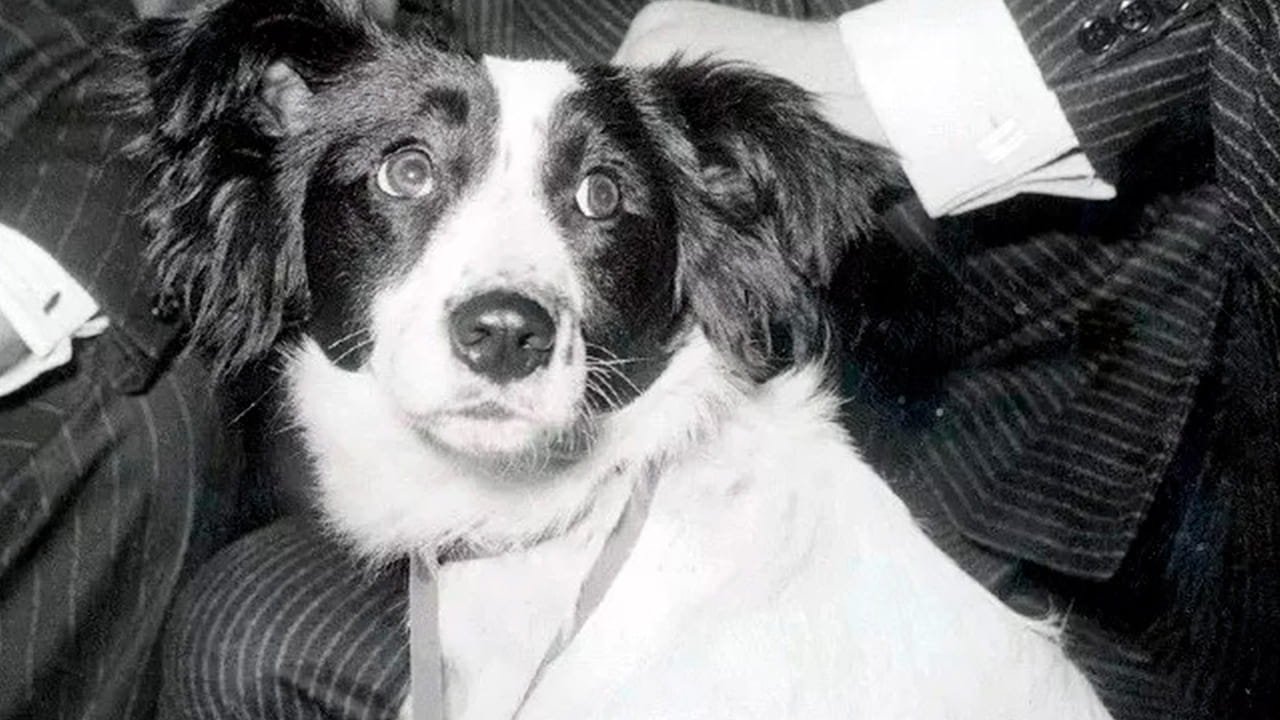
If the first theft was already surprising, the outcome was even more unlikely.
After the trophy disappeared in 1966, England launched an intense search. The police could not find any solid leads.
That was when something completely unexpected happened.
A dog named Pickles, while walking with his owner in a London neighborhood, found a suspicious package in a garden.
Inside it was the stolen trophy.
The discovery solved a case that had mobilized the entire country.
Pickles became an instant celebrity:
- He appeared in newspapers and TV shows.
- He received rewards.
- He even took part in official events.
This episode is remembered to this day as one of the most curious and unlikely stories in World Cup history.
3. Not everyone wanted to take part in the World Cup of Soccer
In the first World Cup, several European teams refused to participate due to the long journey to Uruguay.
4. The red card only appeared in 1970
Before that, there was no standardized visual punishment system.
5. Brazil is the most successful team
With five titles, Brazil leads the all-time ranking.
📊 Most successful teams in World Cup of Soccer history
- Brazil: 5 titles.
- Germany: 4 titles.
- Italy: 4 titles.
- Argentina: 3 titles.
- France: 2 titles.
📌 Practical summary of the World Cup of Soccer
The World Cup is the biggest soccer tournament in the world, created in 1930 by FIFA. Over the decades, the event has evolved, expanded its participants and become a global phenomenon.
⚙️ Step by step: how the World Cup of Soccer works
- Qualifiers in each continent.
- Team qualification.
- Group stage.
- Knockout stage.
- Final and champion.
🌍 Why is the World Cup considered such an important global event?
The FIFA World Cup goes far beyond sports. It is one of the largest global events in terms of audience, economic impact and cultural influence.
The numbers clearly show why.
🌐 Unmatched global reach
The World Cup is one of the most watched events on the planet.
- The 2022 final reached around 1.5 billion viewers worldwide.
- Throughout the tournament, the total audience exceeded 5 billion people.
- More than 200 countries and territories follow the competition.
This means that more than half of the world’s population has some level of contact with the event.
Few events come close to this reach.
💰 Billion-dollar economic impact
The World Cup of Soccer moves massive amounts of money.
- The 2022 edition generated around 7.5 billion US dollars in revenue for FIFA.
- The total economic impact in the host country can exceed 10 billion US dollars.
- In some editions, infrastructure investments surpass 200 billion US dollars (as in Qatar).
In addition, millions of temporary jobs are created in construction, tourism, security and services.
✈️ Tourism on a global scale
The World Cup attracts visitors from all over the world.
- More than 1.4 million international tourists traveled to the 2022 World Cup.
- Hotel occupancy rates reach close to 100% during the tournament.
- Average spending per tourist increases significantly during the event.
This flow strongly boosts hotels, restaurants, transportation and local commerce.
🏳️ National identity and massive engagement
Emotional engagement can also be measured.
- In countries like Brazil, national team matches can exceed 80% TV audience share.
- Social media records billions of interactions during the tournament.
- Players gain millions of followers in just a few days.
The World Cup turns athletes into global icons and strengthens national identity.
📱 Digital and cultural influence
The World Cup also dominates the online environment.
- The 2022 final generated more than 20 million tweets during the match.
- Content related to the tournament accumulates billions of views on platforms like YouTube and TikTok.
- Brands invest billions in global advertising during the event.
This expands the impact of the World Cup beyond the field, influencing trends, behavior and consumption.
 FAQ Frequently Asked Questions about the World Cup of Soccer
The World Cup of Soccer was created in 1930, initiated by Jules Rimet, who was the president of FIFA at the time.
The first edition took place in Uruguay, with only 13 national teams participating. The goal was to create an international tournament exclusively for national teams, separate from the Olympic Games.
Among all national teams, Brazil holds the record for the most titles so far:
Brazil: 5 titles (1958, 1962, 1970, 1994 and 2002)
Germany: 4 titles
Italy: 4 titles
Argentina: 3 titles (including 2022)
France: 2 titles (1998 and 2018)
In the current format with 32 teams, there are 8 groups of 4 teams each.
The top two teams from each group advance to the knockout stage.
Starting in 2026, the tournament will expand to 48 teams, with 12 groups of 4 teams. The top two teams from each group, along with the 8 best third-placed teams, will advance to a 32-team knockout stage.
This makes the tournament larger and more inclusive.
As of 2022, 17 countries have hosted the World Cup, with some hosting more than once.
The next hosts will be the United States, Canada and Mexico in 2026, marking the first time the tournament will be hosted by three countries.
Brazil has hosted twice (1950 and 2014), while Argentina has never hosted the tournament.
 Recommended reading on Tudum Blog
Do you enjoy Sports & Leisure and want to learn more about it?
Check out our practical guide on sports and leisure, with ideas to help you discover activities that match your lifestyle and improve your daily routine.
 Click here for more content about Sports & Leisure.
Or if you want to explore the world more broadly, understand habits, traditions, interesting facts and how different cultures influence our daily lives, we have gathered all our content in a complete article about Culture & Curiosities that will expand your perspective in a light, informative and engaging way.
Click here to access the full content.
Conclusion about the World Cup of Soccer
The World Cup of Soccer is much more than just a sports tournament. Since its creation in 1930 by Jules Rimet, the event has evolved from a competition with only 13 teams into a global phenomenon that stops the world every four years.
Over the decades, the World Cup has brought together unforgettable stories of resilience, brilliance, drama and even controversy, from the rise of Pelé in 1958 and his emotional tears on the field, to Maradona’s “Hand of God,” the mystery surrounding Ronaldo in 1998, his redemption in 2002, the shocking 7–1 result in 2014, and the ultimate crowning of Lionel Messi in 2022.
These moments go far beyond goals and titles. They reveal the power of soccer to unite billions of people, regardless of country, language or culture. The stolen Jules Rimet Trophy, the dog Pickles who became a hero, the expansion to 48 teams in 2026 and the billion-dollar economic impact are just part of a legacy that goes far beyond the field.
In the end, the World Cup reminds us why soccer is called the most popular sport in the world: because it turns boys into legends, creates collective emotions that are hard to describe and builds memories that last for generations. Whether watching from the couch, in the stadium or on social media, one thing is certain: every four years, the world stops and speaks the same language, the language of soccer.
⚽ Did you enjoy this content? Share it with that friend who also loves the World Cup of Soccer and this sport that is one of the most played in the world!