


Many people decide to work on their own from home for different reasons: having flexible hours, avoiding long commutes, starting a personal project with low upfront costs, achieving financial independence or simply turning a personal skill into a source of income. But very early in the process, a question appears that seems simple at first, yet carries deep implications for anyone who works independently: how to work from home on your own professionally?
This question matters because working from home is not about improvising. It actually requires a clear, organized and intentional structure. Without that, solo work turns into a frustrating cycle: messy routines, inconsistent productivity, unprofessional communication, clients who feel uncertain, difficulty scaling and, over time, the feeling that you are always busy but not really moving forward.
This guide was created for anyone who wants to build a real business structure, even if working alone, starting with little or having no technical background. Here you will learn how to create a work environment that supports results, how to organize professional processes even as a solo worker, how to position yourself as a business rather than an improvised freelancer and how to use accessible tools to increase productivity, credibility and revenue.
I will show practical paths, daily-use models and strategic choices that help transform solo work into a solid business. This includes invisible elements (mindset, work posture, organization) and tangible ones (equipment, tools, internal rules, client communication).
1. What it really means to work from home on your own professionally
Before building any structure, it is worth understanding what separates an improvised home setup from a truly professional solo operation. The difference is not in the size of the space or the cost of the equipment. It lies in the intention behind every decision. When someone decides to work from home on their own professionally, they are not simply “doing tasks” in front of a computer. They are creating the conditions for continuity, focus and consistent results.
This professionalism shows up in details that may seem small at first but that define the pace of growth. A space prepared for focus, for example, helps maintain concentration throughout the day. Simple processes, even minimal ones, bring clarity and prevent rework, which is essential for anyone who does not have a team to share responsibilities. Well-defined hours preserve energy, organize priorities and help keep a stable routine, which makes the work flow better.
Another essential element is how you present yourself to clients, partners and suppliers. Even as a one-person operation, you should act like a business. Clear responses, respected deadlines, professional communication and organized service build trust and increase the perceived value of what you deliver. This posture also helps separate what belongs to personal life and what belongs to the business so everything does not blend together and create unnecessary stress.
The right tools play an important role in this process. They allow you to automate repetitive tasks, keep track of deadlines, organize finances and manage information efficiently. When you reduce manual effort, you gain mental space and time to focus on what actually generates results.
Working from home on your own professionally also involves setting realistic goals and tracking your own performance, the same way a business would. It is not about obsessing over numbers but about having clarity to understand whether you are progressing, stagnating or drifting off course.
This is why professionalizing solo work is not about looking big. It is about functioning like a business. Motivation varies. Some days you feel full of energy, and on others it simply does not show up. But those who work with structure do not depend on momentary motivation. Structure is what sustains growth even on ordinary days. It gives continuity to the business and allows it to evolve with stability and purpose.
2. The invisible foundation: how to organize your environment to work from home on your own professionally
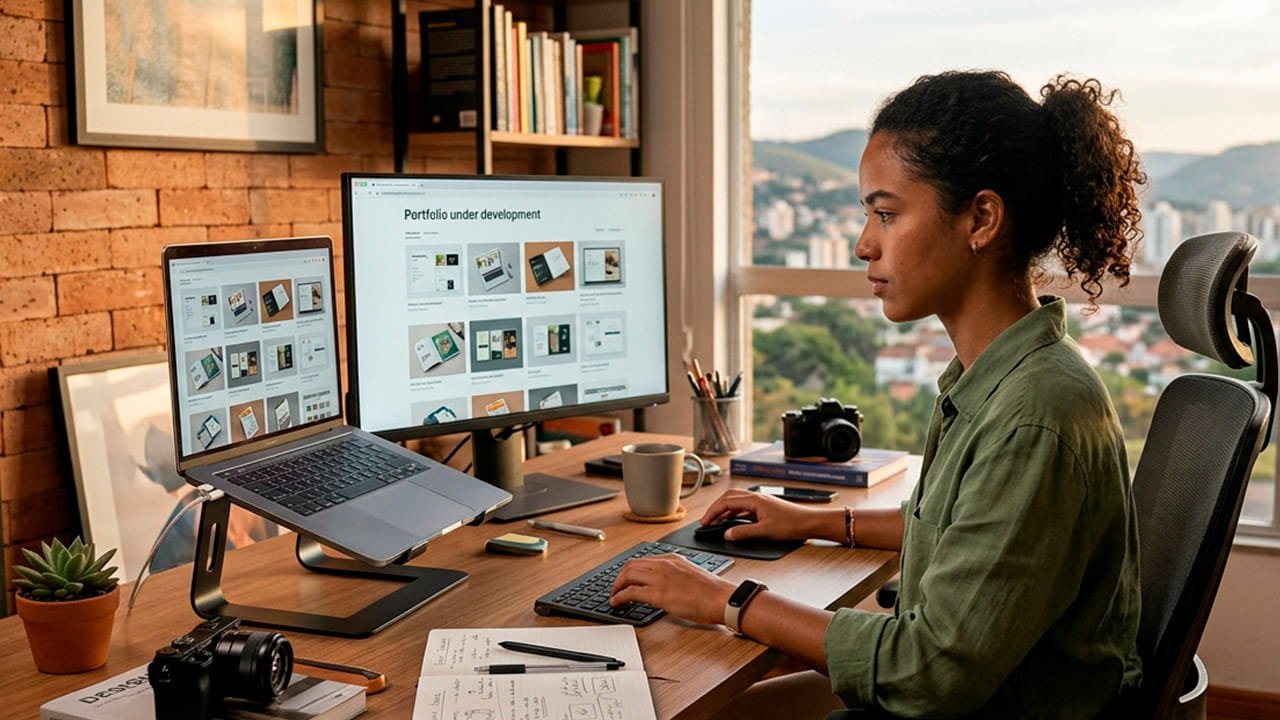
A successful one-person business does not come from expensive equipment, but from an environment that helps you enter and stay in work mode. The place where you work shapes your behavior more than you may realize.
2.1 Creating a functional workspace (even in small areas)
It does not matter if you live in a small apartment or a large house. The goal is not luxury but clarity. Your brain needs to understand: “I am entering work mode.” This psychological separation makes a significant difference.
To achieve that, think about three points:
-
Separate zones – Even if it is just a corner of your bedroom, your desk should be a fixed and defined place. Avoid working from the bed or sofa. This confuses your mind and affects both productivity and rest.
-
Minimal visual organization – A visually clean space reduces distractions. Storage boxes and drawers help hide items that do not belong to your workflow.
-
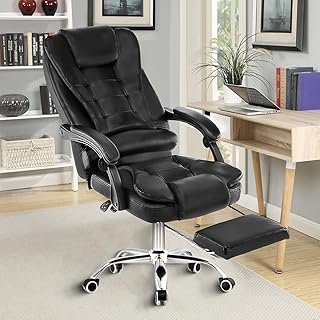
Functional comfort – You do not need to buy everything at once, but a proper chair, good lighting and a laptop stand make a real difference in your performance.
Poor lighting or an uncomfortable chair may not seem like a problem until they begin to affect your health and consistency.
2.2 A routine that helps your brain work and rest
People who work from home often fall into two extremes: working too much or working too little. The solution is to create simple rituals that signal the beginning and the end of your workday.
- Organize your desk before starting.
- Have a coffee before your first task.
- Open your daily planner.
- End your day by closing applications and putting items away.
These small actions create a clear sense of beginning and ending. They protect your mind, your body and your performance.
2.3 The importance of creating invisible boundaries
If you do not set boundaries, the world sets them for you. Establish social boundaries: explain your working hours, teach people at home to respect your space and create small rules to avoid unnecessary interruptions.
Working professionally from home requires this type of boundary, even if it feels uncomfortable at the beginning.
3. Structuring your solo business as a real operation to work from home on your own professionally
Now we enter the core of a business structure. This is where you transform an informal format into a business that inspires trust, attracts better clients and operates in a predictable way.
3.1 Creating a clear identity for your business
Even as a solo professional, you need:
- A professional name, which can be your own name if it makes sense and is supported by clear positioning.
- A visual identity, since a brand is one of the main elements that communicates professionalism.
- Real differentiation, identifying advantages and benefits compared to your competitors.
- A defined audience, knowing exactly who your ideal client is so you understand how to communicate and where not to waste time.
- A consistent narrative, keeping the focus and characteristics you built for your business. Adjustments can and should happen over time, but they must be intentional and, once set, maintained consistently. Every business has its standards and its own way of operating.
When people understand exactly what you do and why it matters, the sales process becomes much more natural.
3.2 Working like a company even when it is just you
Working alone requires seeing your day as the day of a complete company, even if every function is handled by you. The most natural way to do this is to imagine that your routine contains small internal departments that need attention regularly. Each one plays a specific role and, once you understand how they work, organizing your workflow becomes much easier.
The customer service area, for example, includes moments when you communicate with clients, answer questions, send proposals and follow negotiations. If this part is not taken care of, the business stops moving because new opportunities do not enter the pipeline. The execution area involves everything you deliver: projects, services, content or any product that generates real value. If you focus only on customer service and neglect execution, you face delays. If you only execute and do not respond, you let new opportunities disappear.
The financial management area is the one many people neglect, but it is where you organize income, expenses, projections and pricing. You do not need a complex spreadsheet. A simple spreadsheet with income and expense lines, especially fixed and monthly ones, where you record payments received, calculate costs and track pending amounts already transforms the stability of your business. This avoids the feeling of always chasing numbers and never knowing where the money really is.
And within financial management, one of the most important points is separating what belongs to your personal life from what belongs to your business. This does not mean formally opening a company immediately. It means ensuring that your business money has its own space. This allows you to clearly see income, expenses and remaining amounts without interference from your personal routine. Having a separate bank account for your business is a game changer.
This way, you track how much you truly earn, avoid mixing personal payments with business costs and begin to work with real data to make decisions, such as adjusting prices, preparing for slower months or identifying bottlenecks. Once this separation is done, your financial routine finally gains structure.
The communication area covers everything about how you present yourself to the world. This may include updating your portfolio, scheduling posts, sending emails, reconnecting with past clients or adjusting your service descriptions. It is the part that helps people remember your work and understand the value of what you offer.
Finally, the strategy area is the space to think about the future of the business. This is when you evaluate what is working, what can improve, which services need adjustments, which tools can simplify your workflow and what direction you want to grow in the next months. It is a type of reflection that rarely happens when someone lives only responding to urgencies, yet it determines whether the business evolves or stays stuck.
This division works like an internal balance. Once you know where each task belongs, you begin allocating your time more consciously. Part of your day can be dedicated to customer service, another part to execution, another to communication or strategic analysis. There is no single correct formula. What matters is understanding that all of these areas need to exist for your business to remain sustainable.
When you apply this logic, you stop operating in crisis mode and instead manage your workflow with the clarity of someone who leads a company, even while working alone. This reduces overload, decreases improvisation and creates a much healthier and more professional rhythm.
3.3 Creating simple processes that prevent improvisation
Processes do not need to be complex. They can be short checklists or simple step-by-step sequences using text scripts or template files. The purpose is to reduce mental overload.
For example:
- A standard script for responding to clients.
- A single proposal template for quotes.
- A single contract template.
- Fixed delivery deadlines for services.
When everything has a clear way of happening, you spend less energy and maintain consistency.
4. Choosing the right tools to work from home on your own professionally as a solo entrepreneur
When you operate on your own, every tool works as an extra pair of hands. They are not luxuries. They are resources that make your workflow smoother, reduce friction and help you deliver with quality. The goal is not to accumulate gadgets, but to build a structure that allows you to work with consistency, clarity and predictability.
The foundation begins with the physical environment. A comfortable chair that supports your posture prevents the kind of pain that drains productivity. A sturdy desk with an appropriate height creates a professional zone inside your home, and that directly influences your focus. Good lighting also makes a practical difference. Poor lighting causes fatigue, while a directed lamp with a neutral tone brings clarity without straining your eyes. Even simple details, such as raising your laptop screen to eye level with a stand, reduce neck tension and extend your productive time.
Then comes the operational part. Working alone means dealing with files, meetings, deadlines and communication without team support. For this reason, it is essential to keep a cloud storage system, a physical backup on an SSD or portable hard drive and a digital space organized enough so that nothing gets lost. If you meet clients online, a clear webcam and clean audio make a real difference in how professional you appear. Comfortable headphones with good isolation help maintain concentration, even in a home environment.
Your digital infrastructure completes this foundation. A good task manager and a single place to record ideas, deadlines and commitments create stability. You stop depending on memory and start operating with a clear flow. Video conference tools, electronic signatures, simple email automations and response templates help you gain scale, even when working alone.
Finally, there is the invisible part that determines whether your work flows well. Taking care of your health, making short breaks, adjusting screen position, staying hydrated and avoiding long hours without movement all matter. These details are as important as equipment because they support your ability to produce without exhaustion. An organized workspace, basic ergonomics and small mental maintenance routines create an environment where work happens with less effort.
Choosing the right tools means thinking about stability. You do not need everything at once, but you should gradually build a structure that does not rely on improvisation. That is what defines professionalism when working from home: operating with clarity, delivering with quality and having an environment that sustains your growth.
4.1 Essential equipment for a professional workspace
These items can turn a simple room into a functional mini office:
- An ergonomic chair that supports your spine and hips.
- A comfortable keyboard and mouse.
- A laptop or desktop computer with solid performance and a good camera if you need video meetings.
- A stand to raise your screen to eye level.
- Proper lighting.
- Noise-canceling headphones, useful for focusing. See headphone options here
4.2 Software and platforms that simplify solo work
Depending on your type of business, you may need tools such as:
- Task managers.
- Note-taking apps.
- Video conferencing platforms.
- Simple automations like post scheduling.
- Financial management apps.
- Digital banks or online invoicing tools.
- Course platforms if you sell knowledge.
These tools help you maintain a routine that is stable, predictable and professional.
4.3 Reducing manual work as much as possible
Professionalism is connected to the quality of your deliveries, but also to the way you operate. The goal is to build a system that keeps running even on difficult days.
Some examples:
- Pre-saved quick replies on WhatsApp, Telegram or any messaging app.
- Ready-to-use spreadsheets in Excel or Google Drive.
- Reusable presentation templates.
- Automations that send reminders, payment confirmations or invoices.
- Chatbots on your website to support clients during high-volume moments.
When the workflow runs smoothly, your mind performs better.
5. The routine that sustains a real solo business for those who want to work from home on their own professionally
Working professionally from home does not depend only on your environment and tools. It depends on rhythm and consistency.
5.1 Flexible, but defined schedules
Flexibility is an advantage, but too much flexibility turns into chaos. Work with time blocks: focus periods, client support periods and update periods.
5.2 Differentiating strategic tasks from operational tasks
Strategic tasks move the business forward.
Operational tasks simply keep the system running.
Balancing both determines whether you grow or only survive.
5.3 The importance of resting without guilt
People who work from home often feel guilty when they pause. This behavior is not sustainable. Rest is part of productivity. It improves creativity, focus and problem-solving capacity.
6. How to position yourself as a professional when you work from home on your own professionally
Positioning is the perception the market has of you.
6.1 Professional behavior in every interaction
Responding politely, creating communication standards and using organized channels change the way clients perceive your business.
6.2 Showing clarity, not perfection
Clients want to feel that you know what you are doing. Prioritize clarity, aligned expectations and direct communication.
6.3 Strengthening authority as a solo professional
You can build authority with:
- An organized portfolio or success cases.
- Testimonials, especially on open platforms such as Google Business Profile.
- Consistent content on social media or your own website.
- Practical demonstrations of your work.
- Availability to answer client questions quickly and clearly.
Keep this in mind:
Authority is built, not given.
7. Maintaining consistent growth while you work from home on your own professionally
The biggest risk for those who work from home is stagnation. Growth needs to be part of your routine.
7.1 Continuous learning without excess
Learning is part of the process, but avoid using study as an excuse not to take action. Choose one topic at a time and apply everything quickly.
7.2 Weekly and monthly reviews
Keep track of:
- Clients acquired.
- Tasks delivered.
- Revenue.
- Time invested.
- What worked.
- What needs to change.
Businesses that grow are businesses that review.
7.3 Testing, adapting and evolving
The big advantage of being solo is agility. You can test ideas quickly and adjust without bureaucracy.
❓ (FAQ) Frequently asked questions about how to work from home on your own professionally
Start by building a minimal structure: a fixed workspace, a clear routine and simple processes. Before buying expensive equipment, organize your environment, reduce improvisation and use free tools whenever possible.
Yes. Solo businesses grow through well-defined processes, consistency, authority and good management. Growth doesn’t depend on team size, but on the way you operate.
Task management apps, video-meeting platforms, cloud storage, note-taking tools, financial management apps and basic equipment like proper lighting and noise-isolating headphones can make a real difference in performance.
Create an exclusive workspace, set clear start-and-end times for your workday, and establish boundaries with people at home. Small rules reduce interruptions and help maintain focus and balance.
🔗 Recommended reading on Tudum blog
If you are looking to understand which professional path makes the most sense for your current stage, career, side projects, or entrepreneurship, we have gathered all our content on these topics in a comprehensive article about Professions & Entrepreneurship, designed to help you see your options more clearly.
👉 Click here to read the article.
Conclusion about how to work from home on your own professionally
Working alone from home in a professional way is absolutely possible and, when done with proper structure, it can be even more efficient than working in a traditional office. The key is creating an environment that supports focus, adopting simple processes, investing in a few essential tools, and developing an entrepreneurial mindset.
You do not need to look big. You need to operate like a business.
If this content helped you, share it with someone who is also building their own path.
🔗 Want to keep learning about how to work remotely or from home in a professional way?
Read our other articles:
👉 Small business automations, save time and boost results
Click here for more content on Professions & Entrepreneurship.